
Connect Every Part of Your Yard
Paver Walkways & Pathways in Hickory for guiding foot traffic between doors, driveways, patios, and garden areas without mud or worn grass
Quality Greens Landscapes builds paver walkways that define routes through your yard, protect high-traffic areas, and improve curb appeal from the street. You need a walkway when people cut across the grass and leave a dirt path, when stepping stones sink into the ground, or when you want a clear, stable route from the driveway to the front door or from the patio to the garden. The right walkway prevents mud, reduces maintenance, and gives structure to how the yard is used.
Paver pathways are installed using brick, stone, or concrete pavers set on a compacted base with edge restraint to prevent spreading. The pavers are laid in patterns like herringbone, running bond, or basketweave depending on the look you want and how the path curves or meets other hardscape features. Joints are filled with sand to lock the pavers in place and allow for minor movement without cracking. Proper base depth and drainage keep the path from sinking or heaving after freeze-thaw cycles, which is a concern in Hickory where winter temperatures fluctuate.
If you're tired of uneven ground, standing water along your routes, or worn grass where people walk, a paver pathway solves the problem and lasts for years with minimal upkeep.
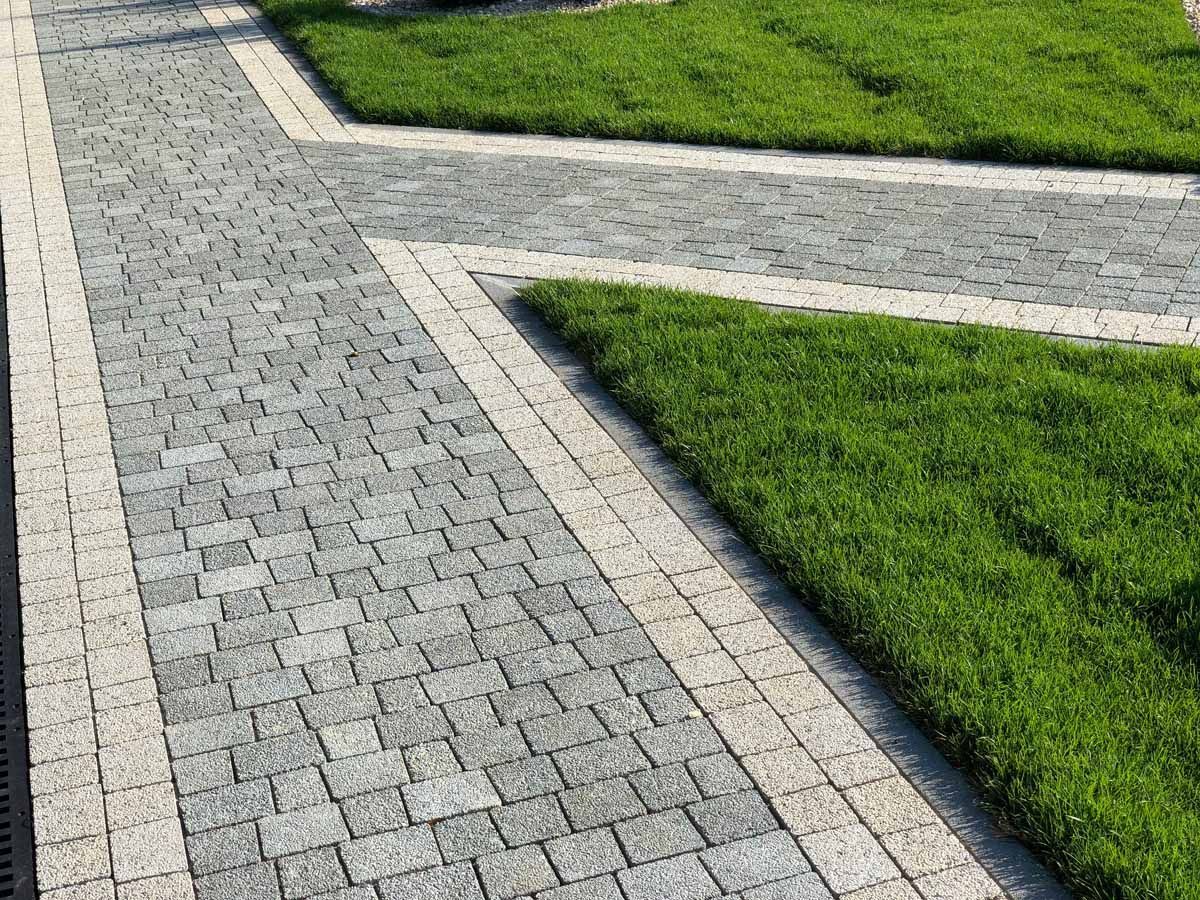
What a Paver Walkway Provides
You get a stable, level surface that directs foot traffic and stays in place through rain, freeze, and daily use. The edges stay defined, the surface drains quickly, and individual pavers can be lifted and reset if tree roots or settling cause minor shifts. Walkways can run straight or curve around plantings, follow the natural grade, or include steps where elevation changes.
After installation, you'll notice grass stays intact in areas that used to get trampled, no more muddy spots after rain, and the yard feels more organized. Quality Greens Landscapes matches paver color and texture to your existing hardscape or home exterior so the pathway integrates with the overall site design rather than standing out awkwardly.
Each project includes excavation, base installation, paver placement, edge restraint, and joint sand. Lighting, plantings along the edges, and tie-ins to patios or driveways are handled as part of the site plan. Grading adjustments to manage runoff are included if needed to prevent water from pooling on or near the path.
Questions About Walkway Design and Installation
Homeowners usually ask about durability, how wide the path should be, and what happens when the ground shifts or freezes.
- What width works best for a front walkway? Most front entry walkways are at least four feet wide to allow two people to walk side by side comfortably, while garden paths can be narrower depending on use.
- How deep does the base need to be? The base is typically four to six inches of compacted gravel, with an additional inch of bedding sand under the pavers to ensure stability and drainage.
- When do pavers need to be reset? If tree roots grow under the path or the base settles unevenly, individual pavers can be lifted, the base corrected, and the pavers reinstalled without replacing the entire walkway.
- Why use pavers instead of poured concrete? Pavers resist cracking, allow for individual repairs, drain faster, and offer more design flexibility in color, texture, and pattern compared to a single concrete slab.
- What happens to the walkway in winter in Hickory? Properly installed pavers handle freeze-thaw cycles without cracking because the joints allow minor movement and the permeable base prevents ice buildup underneath.
If you need a clear, durable path that holds up through daily use and weather, paver walkways give you function and curb appeal in one installation. Contact Quality Greens Landscapes to review layout, materials, and site conditions for your property.