
Level Your Yard and Hold the Hillside
Retaining Wall Construction in Hickory for managing steep slopes and stopping soil from sliding into driveways or foundations
Quality Greens Landscapes installs retaining walls that manage elevation changes, prevent erosion, and create usable flat areas in yards with significant slope. You need a retaining wall when soil shifts after heavy rain, when your driveway or patio sits lower than the grade behind it, or when you want to tier a hillside into distinct planting or seating zones. The wall holds back soil pressure, redirects water, and stabilizes the ground so you can plant, walk, or build on previously unusable terrain.
Retaining walls are built using modular block, natural stone, or decorative systems that interlock for structural stability. Each installation includes excavation to solid footing, a compacted gravel base, drainage pipe behind the wall, and backfill with permeable material to manage water pressure. Without proper drainage, hydrostatic pressure builds up and pushes the wall forward over time. In Hickory, where clay soils retain moisture and seasonal rain can be heavy, managing water movement behind the wall is as important as the wall itself.
If you're dealing with washout, limited yard space, or uneven terrain that makes mowing or planting difficult, a retaining wall can open up your property and protect what's already there.
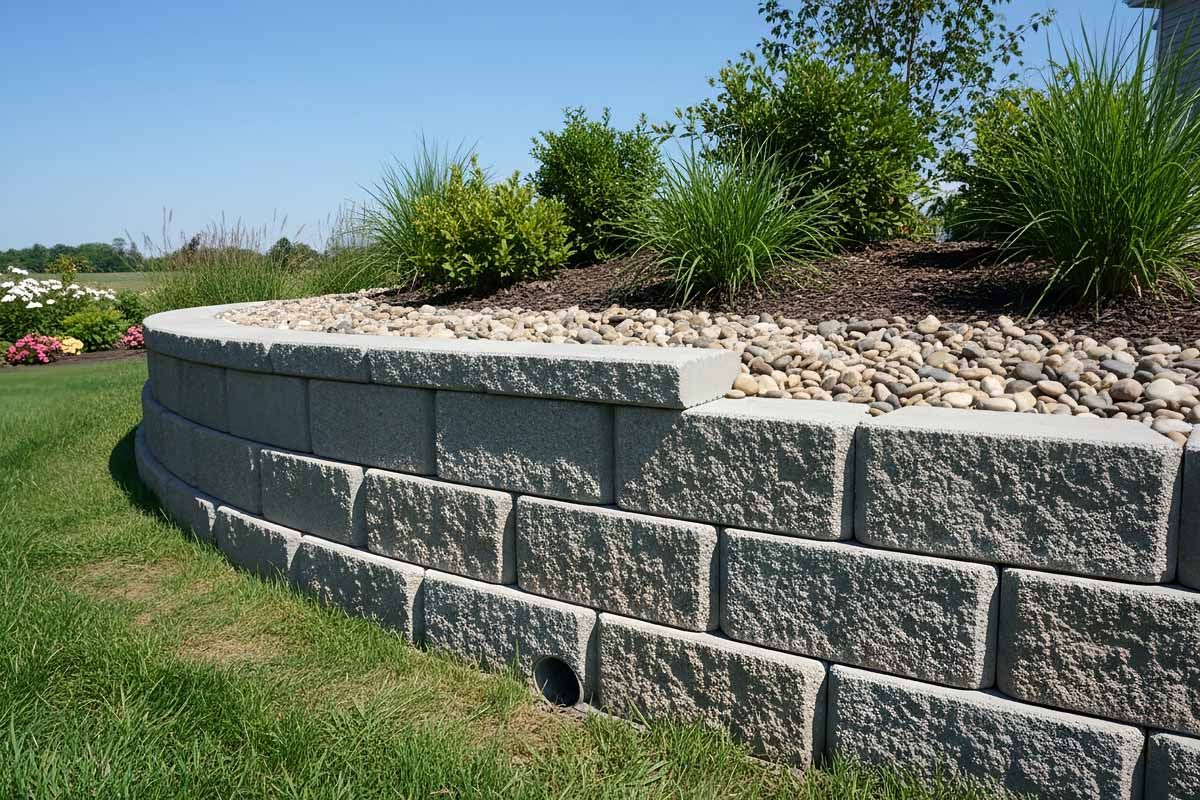
How a Retaining Wall Changes Your Property
You gain flat, stable ground where the slope used to limit what you could do. Water that once ran across the surface now moves through drainage channels behind the wall and exits through weep holes or drainage pipe. The wall surface itself can be straight or curved, tiered in multiple levels, or designed with integrated steps to connect upper and lower yard sections.
After the retaining wall is installed, you'll see the soil stay in place after storms, the yard becomes easier to maintain, and the space opens up for planting beds, patios, or walkways that weren't possible before. Quality Greens Landscapes works with the existing grade to determine wall height, setback, and drainage routing so the structure performs correctly and meets local grading standards.
Each retaining wall project includes excavation, base prep, block or stone placement, drainage installation, and backfill. Engineering may be required depending on wall height and load. Planting behind the wall, topsoil placement, and tie-ins to other hardscape features are handled as part of the overall site plan if requested.
What Property Owners Ask About Retaining Walls
Questions usually focus on how the wall will hold up, what happens to water, and what can be done with the newly leveled space.
- What prevents a retaining wall from leaning or failing?
Proper base preparation, drainage behind the wall, and correct backfill material keep hydrostatic pressure from building up and pushing the wall forward. - How tall can a retaining wall be built?
Most residential walls range from two to four feet in height, but taller walls may require engineering and permits depending on site conditions and local codes. - When is a retaining wall necessary instead of regrading?
When the slope is too steep to stabilize with plants alone, when space is limited, or when you need a defined edge to protect structures or driveways below the grade. - Why does water need to drain behind the wall?
Water trapped in the soil behind a retaining wall creates pressure that destabilizes the structure and causes the wall to bow, crack, or shift over time. - What can I do with the space above or below the wall?
You can plant, install a patio, add steps, or extend the flat area by tiering additional walls depending on how much elevation change exists across your property in Hickory.
If erosion, slope, or poor drainage is limiting how you use your yard, a retaining wall stabilizes the site and gives you room to work with. Reach out to Quality Greens Landscapes to review grade, drainage, and layout options for your property.